Canadians: This Is the RRSP Savings Goal You Need for a Comfortable Retirement
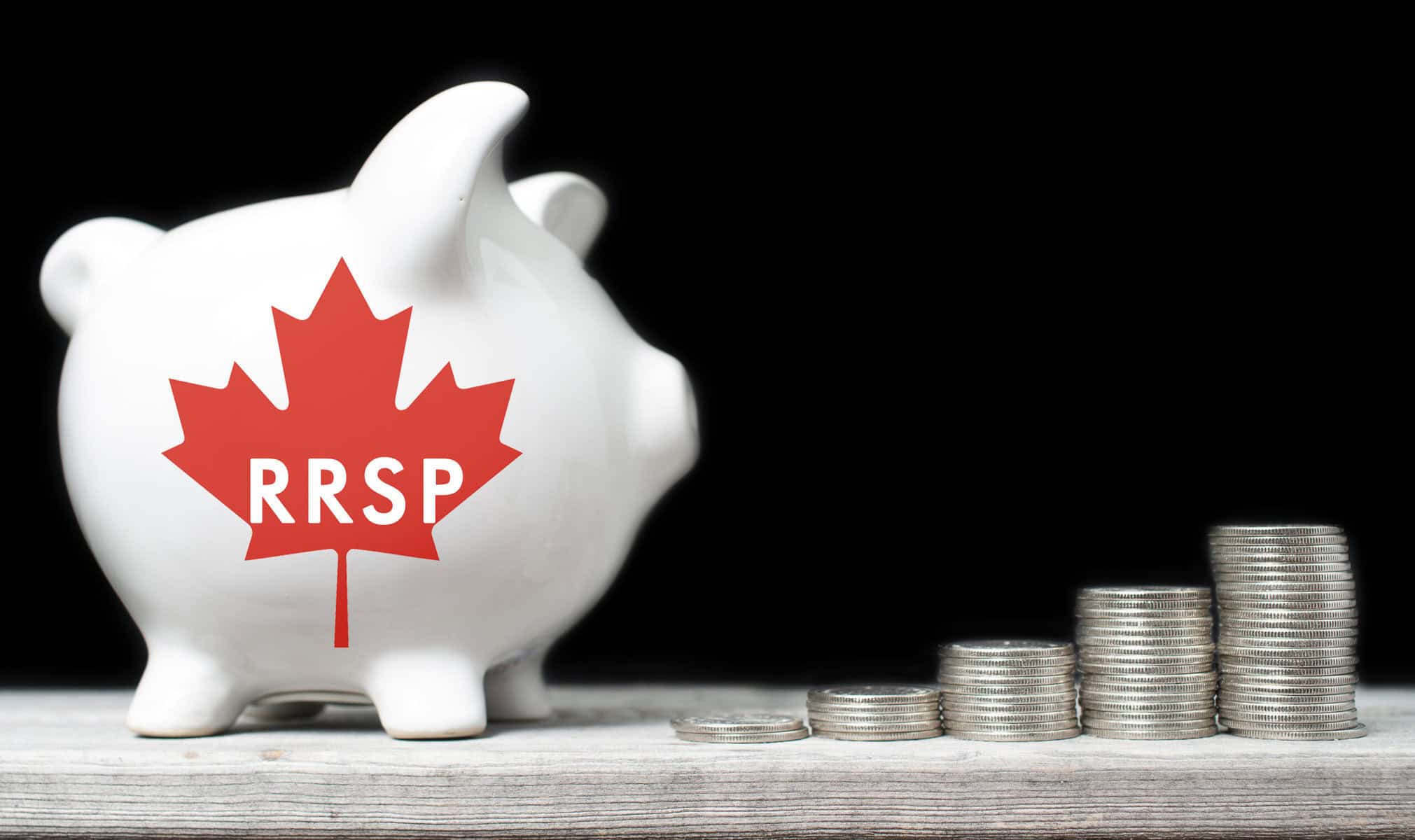
What amount should you have in your registered retirement savings plan (RRSP) to retire comfortably in 2025?
It's a valid query since without an employer-provided pension plan, relying solely on the Canada Pension Plan (CPP) and Old Age Security (OAS) might fall short of covering expenses during retirement. Typically, the average CPP payout amounts to around $700, whereas OAS provides roughly $725 for individuals between ages 65–74. Combined, these benefits often fail to meet rental costs in major Canadian urban centers. You could increase your CPP income up to about $1,800 monthly; however, this would require postponing benefit collection until reaching age 70. and earning maximum pensionable earnings.
Many Canadians have the option to postpone receiving their Canadian Pension Plan benefits until age 70 if they choose to do so; however, achieving the highest possible pension amount relies on your professional achievements, which cannot be altered with ease.
Therefore, without a defined benefit plan, you'll require something else. RRSP or TFSA In this piece, I will delve into precisely how much you'll require for retirement savings as recommended by financial experts.
From $750,000 to $1.7 million
Based on different assessments provided by numerous Canadian financial experts and surveys conducted among Canadians, one needs anywhere from $750,000 to $1.7 million saved up for retirement in Canada. A figure of $750,000 was suggested by these analyses. CIBC Survey as the $1.7 million figure originates from a Bank of Montreal The survey (which was done more recently) was carried out later.
It's understandable why the range of estimates varies greatly since numerous distinct elements contribute to assessing whether you have sufficient funds for retirement.
- Home ownership. Are you a tenant or a homeowner? If you're a homeowner, do you still carry a mortgage? Typically, someone who owns their home without a mortgage tends to have lower ongoing costs compared to either renters or homeowners who are still paying off their mortgages.
- Home equity. Are you including the value of assets in your home as part of your savings? If you do not include it That is, limit the term 'savings' to RRSPs, TFSAs, and cash). Then a conservative estimate is likely closer to reality.
- Where you live. Are you residing in a costly metropolitan area or a budget-friendly countryside? If it's the city, you might require around $1.7 million; however, for a rural setting, perhaps $750,000 would be adequate.
- Tax sheltering. The tax shelter provided by a TFSA is more beneficial than the tax deferral offered by an RRSP. Having $750,000 fully within a TFSA should be sufficient for most individuals. However, the equivalent sum inside an RRSP may fall short of meeting their needs.
Ways to Increase Your RRSP Wealth
No matter how much savings you require for retirement, it’s beneficial to contribute regularly to your RRSP and make prudent investments. Doing so ensures financial security during your retirement years. The most effective approach involves using exchange-traded funds (ETFs), which are baskets of securities traded like stocks. These ETFs provide diversification across various assets, negating the necessity of detailed company-by-company analysis and minimizing overall risk.
Take the BMO Canadian Dividend ETF ( TSX:ZDV ) For instance, ZDV is a varied Canadian fund comprising 50% dividend stocks With its 3.8% yield being above average, it offers significant potential for generating passive income. This ETF comes with a reasonably low 0.39% management fee. Additionally, the broad range of holdings ensures ample diversification. Furthermore, since it’s exclusively focused on Canadian assets, the dividends aren’t subjected to withholding taxes. All things considered, this makes it an appealing investment option.
The post Canadians: This Is the Amount Needed in Your RRSP for Retirement appeared first on The Motley Fool Canada .
Is it wise to put $1,000 into the BMO Canadian Dividend ETF at this moment?
Prior to purchasing shares of the BMO Canadian Dividend ETF, keep these points in mind:
The Motley Fool Stock Advisor Canada The analyst team has recently pinpointed what they think could be the Leading Stocks for 2025 and Further Ahead For investors looking to purchase now... BMO Canadian Dividend ETF was not among them. The top stocks selected have the potential to generate substantial returns in the upcoming years.
Consider MercadoLibre , which was initially suggested on January 8, 2014... if you had invested $1,000 in the "Latin American eBay" back then, you would have $21,058.57 !*
Stock Advisor Canada offers investors a straightforward roadmap to achieving success. This includes advice on constructing a diversified investment portfolio, receiving periodic insights from financial experts, and getting two fresh stock recommendations monthly—one chosen from Canadian markets and another from American ones. Stock Advisor Canada The service has exceeded the return of the S&P/TSX Composite Index by 38 percentage points since 2013*.
See the Top Stocks * Returns as of February 20, 2025
More reading
- Ways to Utilize Your TFSA for an Average of $250.62 in Monthly Passive Income
- 3 Canadian Exchange-Traded Funds to Purchase and Keep in a Tax-Free Savings Account for an Enduring Partnership
- 2 Top Dividend ETFs for Buying and Earning Passive Income
- Seeking Market Protection? Canadian Dividend ETFs Offer a Comprehensive Answer
- Canadians: This Is the Amount Needed in Your TFSA for Retirement
Fool contributor Andrew Button The Motley Fool does not hold any shares in the stocks discussed. The Motley Fool has no position in any of the stocks mentioned. The Motley Fool has a disclosure policy .


Comments
Post a Comment