Distant Spacecraft Power Down Instruments as They Venture into Interstellar Space
Subscribe to 's Wonder Theory science newsletter. Dive into the cosmos through updates on captivating findings, technological progressions, and additional developments. .
NASA's two Voyager spacecraft, which were launched 47 years ago, are now deactivating certain scientific instruments as part of efforts to save power and prolong their historic missions. Both Voyager 1 and Voyager 2 continue to investigate unknown regions within interstellar space.
On February 25, engineers from NASA’s Jet Propulsion Laboratory located in Pasadena, California, issued instructions to deactivate the cosmic ray subsystem experiment aboard Voyager 1. Additionally, starting March 24, Voyager 2 will cease operations of its low-energy charged particle instrument. As a result, both probes now retain only three operational scientific devices.
When released just weeks apart in 1977, the Voyager spacecraft were equipped with matching suites of 10 scientific tools.
However, over time, the power supply for these probes has slowly decreased. The Voyager spacecraft depend on electricity produced from the decay heat of plutonium, with each experiencing approximately a 4-watt loss in power annually.
The Voyagers have been deep-space celebrities since their launch, and we aim to maintain this status for as long as we can," stated Suzanne Dodd, Voyager project manager at JPL, in a release. "However, the electrical power is depleting. Unless we switch off one instrument on each Voyager soon, they might only have a few additional months left before we must consider ending the mission.
Investigating uncharted territory
Voyager 1 and Voyager 2, initially crafted to explore the major planets within our solar system, have become the farthest human-made objects from Earth.
Voyager 1 has traveled beyond 15 billion miles (25 billion kilometers) from our planet, whereas Voyager 2 is more than 13 billion miles (21 billion kilometers) distant, as reported. NASA . These two probes are the sole spacecraft to function outside the heliosphere, which is the Sun’s magnetic field and particle extension surpassing even Pluto’s orbital path.
The equipment required for gathering information during the planetary encounters in the 1970s and 1980s was powered down once the spacecraft achieved their primary goals. However, the Voyager mission team kept some instruments active to continue studying the heliosphere and interstellar space.
In 2012, Voyager 1 ventured into interstellar space, which is the region beyond our solar system located between stars, followed by Voyager 2 in 2018. Both spacecraft chose distinct paths; Voyager 1 heads upwards, diverging from the orbital plane of the Sun’s planetary system, whereas Voyager 2 travels downward through this same plane.
As time passed, the Voyager team progressively deactivated various instruments to guarantee that the probes could keep going on their historic missions. In October, NASA turned off Voyager 2’s plasma science instrument Created to gauge the quantity of electrically charged particles in space, this instrument has recently been providing only a restricted dataset owing to its positioning. Meanwhile, Voyager 1’s equivalent tool has remained inactive for several years as it experienced declining functionality over time.
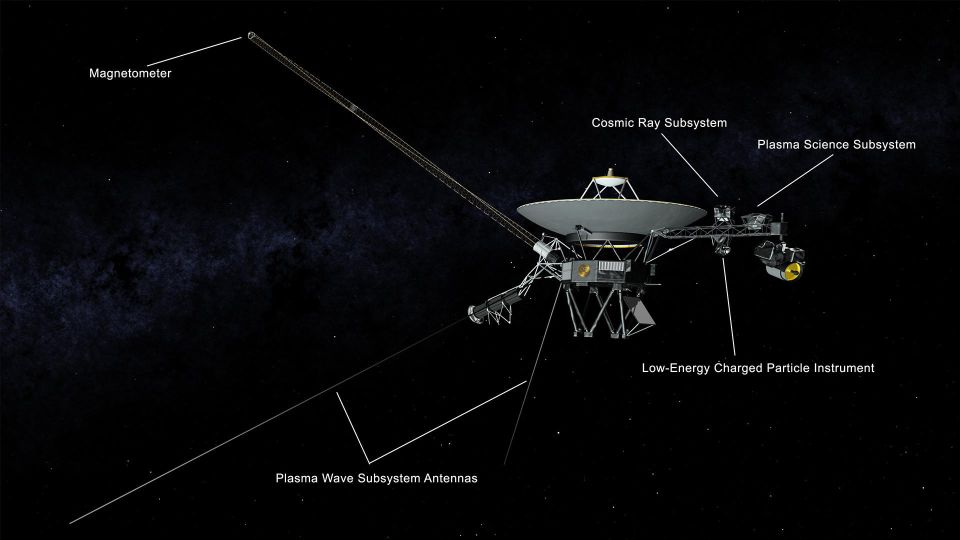
Last week, the cosmic ray subsystem on Voyager 1 was deactivated. This system consists of three telescopes designed to study and measure cosmic rays—these being the highest-energy particles found throughout the cosmos, emitted both by the Sun and our Milky Way Galaxy. Scientists at NASA utilized information gathered by this equipment to pinpoint precisely when and where Voyager 1 transitioned out of the heliosphere into interstellar space.
The low-energy charged particle instrument aboard Voyager 2, scheduled for shutdown later this month, detects ions, electrons, and cosmic rays within our solar system and galaxy. This device comprises several components including a telescope and a magnetospheric particle analyzer, both capable of observing in all directions due to their placement on a spinning platform driven by a stepper motor. On Earth, this motor underwent testing up to 500,000 steps ensuring reliable operation during Voyager 2’s encounter with Saturn in August 1980. After shutting down, the motor will have executed over 8.5 million steps.
While each probe will continue to gather distinct information, the team will be unable to simultaneously conduct matching particle analyses at separate points within interstellar space, noted Linda Spilker, who serves as the Voyager project scientist at JPL.
Equipping both spacecraft with matching devices enabled researchers to contrast the conditions being examined by the Voyager missions, highlighting their resemblances and discrepancies.
The Voyager spacecraft have greatly exceeded their initial objective of exploring the outer planets," stated Patrick Koehn, Voyager program scientist at NASA Headquarters in Washington, in a release. "Each piece of extra data we've collected since then isn’t just invaluable supplementary science for heliophysics; it’s also proof of the outstanding engineering that went into building the Voyagers—work that began almost half a century ago and persists even now.
The Voyager probes’ future
As the Voyager probes grow older, the mission’s engineers have had to get more inventive in tackling unforeseen issues, including communication blackouts along with various bugs, over immense cosmic expanses.
Once the two devices are deactivated, the Voyager probes can continue operating for approximately one more year. After this period, the team must turn off an extra instrument per spacecraft. By 2026, plans are underway to deactivate Voyager 1’s low-energy charged particle detector and Voyager 2’s cosmic ray subsystem.
In the meantime, both Voyager 1 and 2 will keep going on their missions with their plasma wave subsystems still active. These instruments gauge waves present in space plasma environments, along with the functioning magnetometers that track variations in magnetic fields.
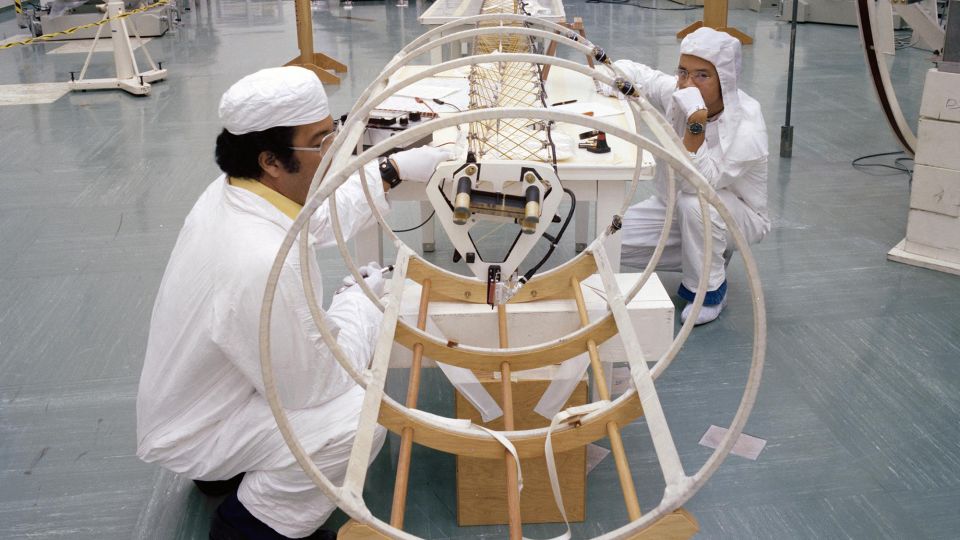
"Both Voyagers will keep gathering distinctive data on phenomena like high-energy cosmic rays and interstellar plasma, along with studying interstellar magnetic fields and radio waves within the interstellar medium, even those influenced by the Sun that reach their distant locations," explained Spilker.
NASA specialists think that the probes can save sufficient energy to continue operations through the 2030s, maintaining functionality with at least one scientific tool each. However, they acknowledge that any new hurdles encountered might ultimately result in the conclusion of the Voyager mission.
“Every minute of every day, the Voyagers explore a region where no spacecraft has gone before,” Spilker said. “That also means every day could be our last. But that day could also bring another interstellar revelation. So, we’re pulling out all the stops, doing what we can to make sure Voyagers 1 and 2 continue their trailblazing for the maximum time possible.”
To receive additional news and newsletters, sign up for an account here.


Comments
Post a Comment