Uncovering the Common Traits That Might Indicate You're Autistic—and How to Seek Diagnosis
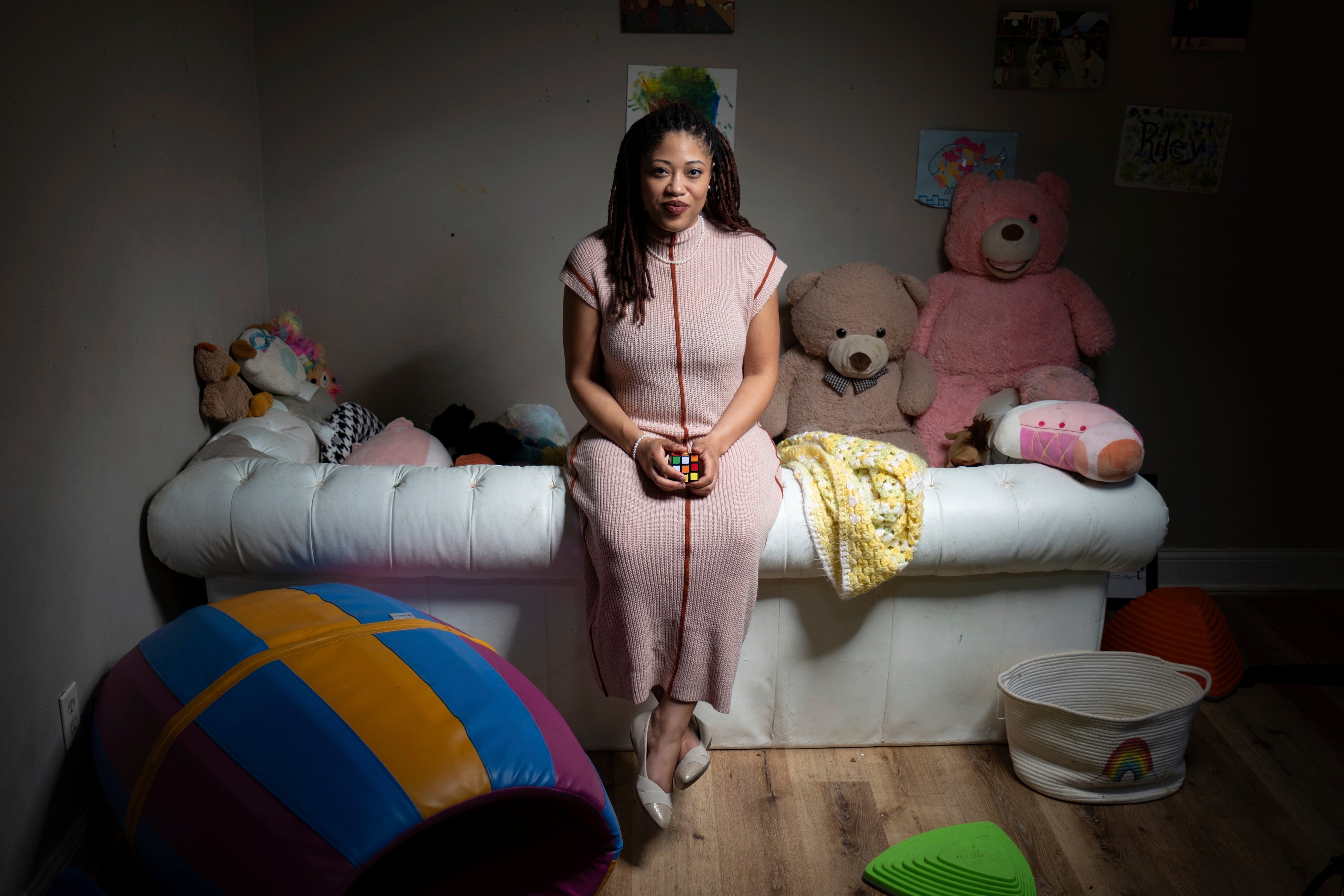
Businesswoman Natasha Nelson has always been aware that she stands out from the crowd.
The individual from Stone Mountain, Georgia, who is 35 years old, faced challenges in setting social standards.
She struggled with casual conversation and couldn't grasp why individuals bothered with tasks such as tidying up the bedding.
She was diagnosed with autism In 2023—shortly following her youngest daughter’s diagnosis.
Currently, Nelson is urging individuals to look for assistance. diagnosis If they also believe, or have long suspected, that they might fall within the autism spectrum.
"If your entire life has seemed chaotic and you never truly feel at ease or thriving, but instead find yourself merely surviving and moving from one event to another, what do you have to lose?" asked Nelson.
Typical indicators of autism encompass difficulties in social communication along with an intense focus on specific activities or subjects — as Nelson mentions, "individuals have turned into my special interest nowadays" — and these traits might not be recognized during one's early years.
However, obtaining an autism diagnosis as an adult can be expensive and challenging because there is a scarcity of healthcare providers who specialize in working with adults. Below is additional information regarding what you ought to know about diagnosing autism in adulthood.
What does autism entail, and at what age is it typically identified?
Autism spectrum disorder encompasses various cognitive, linguistic, and social challenges such as adhering strictly to routines, exhibiting fixated or repetitive interests, and finding it difficult to maintain eye contact or interpret non-verbal cues. This condition usually becomes evident in early years, with the American Academy of Pediatrics advising screenings for all children at around 18 months old.
What factors contribute to the increase in adult diagnoses of autism?
In recent years, more adults have been seeking understanding about their own neurodivergence—often following the diagnosis of their children or after encountering related content on social media platforms. According to a study released last year in JAMA Network Open, there has been a significant surge with a 452 per cent rise in autism diagnoses among adults aged 26 to 34 between 2011 and 2022.
Certain characteristics of autism might remain undetected until later in life, particularly when adults face additional social pressures. Some individuals could have developed strategies to conceal particular actions, often referred to as masking.
“Over time, adults have developed coping mechanisms,” explained Whitney Ence, a psychologist at the University of California San Francisco who specializes in working with autistic adults. “They might have figured out things like ‘I cannot show this in public, so I do it privately instead.’”
There's also a similarity in symptom presentation among different conditions like ADHD and OCD This can make diagnosing autism challenging because of issues related to understanding nonverbal social signals or dealing with aspects of executive function such as maintaining focus, managing working memory, and solving problems.
What are the signs of autism in grown-ups?
Symptoms Present themselves uniquely for each individual, and numerous characteristics are shared with those who do not have autism, such as appreciating structured activities or delving deeply into detailed information.
However, for an individual to be diagnosed with autism, the symptoms must lead to considerable functional challenges, according to Dr. Arthur Westover, a psychiatrist specializing in autism at the University of Texas Southwestern Medical Center.
We're all humans basically. We enjoy routines... finding some enjoyment and feeling better through routines doesn’t necessarily imply you have autism," Westover stated. "There’s more depth to it.
Russell Lehmann, who is 34 years old, has been living with an autism diagnosis for over two decades. As a motivational speaker, he maintains certain routines which provide him solace but also cause stress. He finds ease in consuming the same meals and purchasing identical grocery items regularly. However, missing his daily one-and-a-half-hour workout at the gym leads to overwhelming sensations of sadness and inadequacy.
It’s as though there's no gym, no specific day," he remarked. "... My regimen feels like a profound weight, since each evening I lie down with the knowledge that I must follow a routine I despise just to get through the next day.
What is the process for getting a diagnosis?
Although numerous online screening tools exist, autism is a multifaceted condition; therefore, specialists suggest consulting your primary healthcare provider for a referral to a psychiatrist.
The psychiatrist could seek to speak with individuals who knew you during your early years, such as relatives and acquaintances, who may confirm that signs of these issues were evident back then.
Certain psychiatrists might direct you to a psychologist, who could administer a recognized diagnostic test for autism or rely on their professional judgment. No brain imaging scans or blood tests currently exist for diagnosing autism.
Receiving a diagnosis for autism later in life can be both expensive and time-consuming. According to Westover, there’s a significant lack of professionals specializing in care for autistic adults. This scarcity led Nelson to wait three years for her diagnosis, during which she spent over $3,000 from her own pocket.
ENCE also recommends reflecting on several questions before seeking a professional assessment, acknowledging that you might encounter delays: "What factors are guiding me toward wanting an official evaluation? Is my objective to gain access to specific services? Are there resources currently unavailable to me?"
The Independent has consistently maintained a worldwide viewpoint. Rooted in robust international journalism and insightful analysis, the publication now boasts a readership that would have been unimaginable at its inception as a newcomer in Britain’s media landscape. In this era, for the first time since the conclusion of World War II, these core principles—pluralism, rationality, progressivism, humaneness, and global engagement—are facing challenges globally. Despite these threats, The Independent continues to expand its influence.


Comments
Post a Comment